Fatigue and Hard Impacts
The anxiety I felt at the end of the Bromont camp was entirely justified. We did not fully taper for the Pan American Championships in February. Before even boarding the flight to Santiago, Chile, I felt pretty spent. We were told that a lessened load just a couple of days before the competition would be enough to freshen us up. It was not.
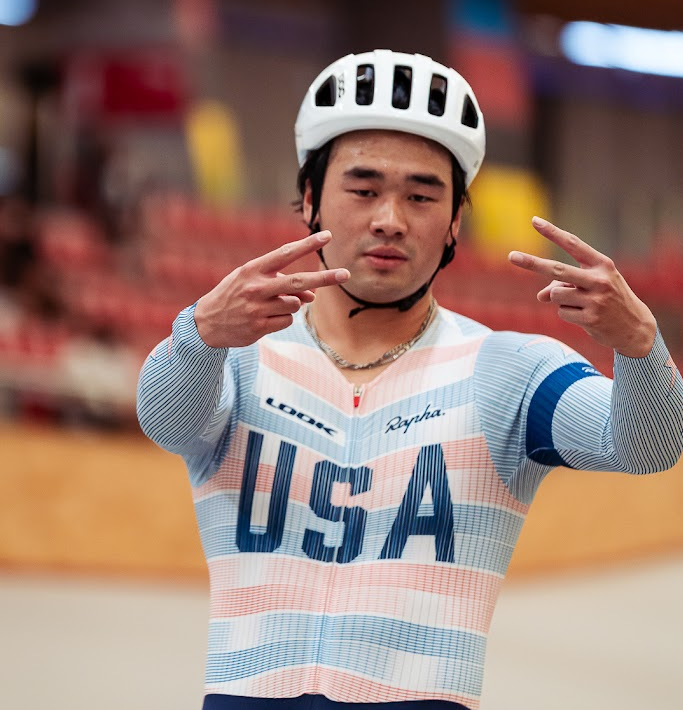
Pan Ams in Santiago Chile
By the time I got on the track, my system was flat and my top-end speed was missing. I raced poorly and failed to hit the marks I needed. However, there was one major positive to take away from the trip. For once, I was not sick at a major competition. My precautionary planning and strict travel hygiene protocols actually worked. It was a small silver lining, but a crucial data point proving I could successfully manage my health on the road.
I returned home needing an immediate reset before the upcoming World Cups in Asia. The margin for error was shrinking, so I pushed the intensity back up in my solo training sessions. Track sprinting is an unforgiving sport, and in March, that physical reality caught up with me in a split second.
I had a severe training crash at home. The impact was violent, leaving me with a concussion and a massive black eye. It is one thing to manage fatigue and the fear of overtraining. It is an entirely different challenge to hit the boards at speed and navigate the neurological fallout.
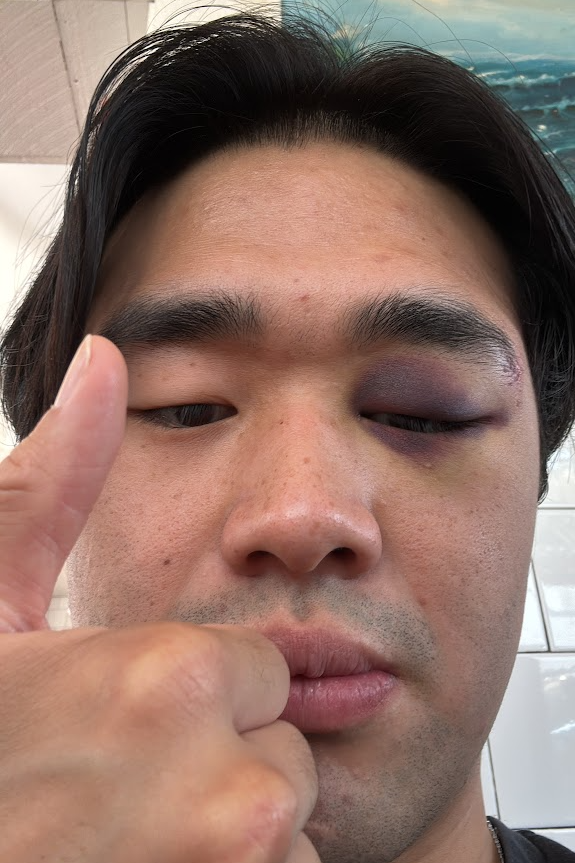
Black eye + concussed post crash
The World Cup events in Hong Kong and Malaysia were rapidly approaching. Instead of using those critical weeks to sharpen my form and dial in my sprints, I was suddenly just trying to heal enough to see straight. The clock was ticking, and getting cleared to fly to Asia was about to become an uphill battle.
